
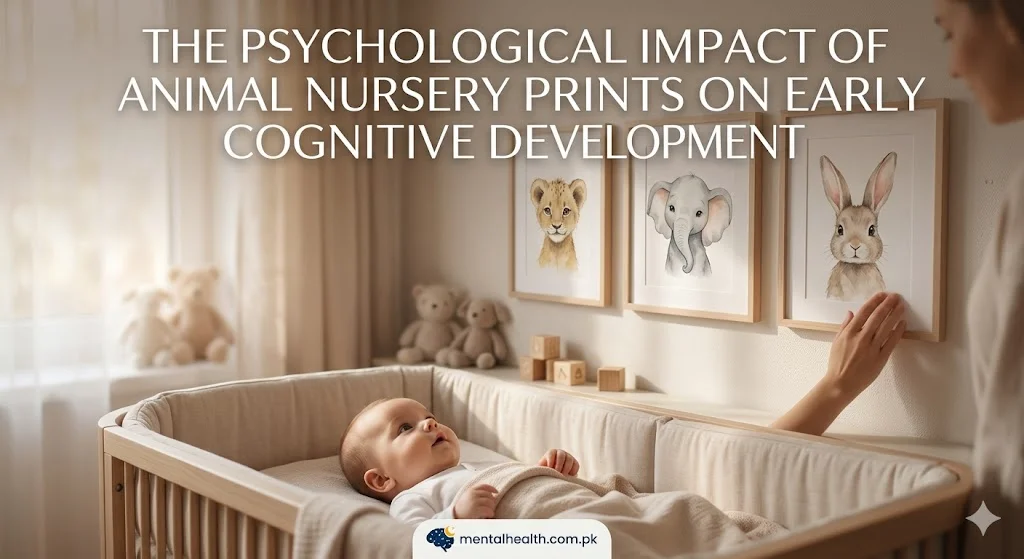
The Psychological Impact of Animal Nursery Prints on Early Cognitive Development
Preparing a space for a new baby is an emotional milestone filled with hope and anticipation. As parents carefully select colors and decor, they are actually designing their child’s very first learning environment. The visual elements surrounding an infant serve as fundamental tools for early brain development and sensory integration.
Among the most popular choices, animal nursery prints provide significant cognitive benefits that extend far beyond simple aesthetics. From a clinical psychology perspective, these specific visual stimuli help shape infant observation skills and emotional regulation. This guide explores the psychological mechanisms behind choosing the right visual environment for young minds.
How Visual Environments Shape Infant Brains
During the first year of life, a baby’s brain develops at an unprecedented rate, forming millions of neural connections every day. Visual stimulation plays a crucial role in strengthening these pathways. When infants focus on structured imagery, they actively build the cognitive frameworks necessary for pattern recognition and spatial awareness.
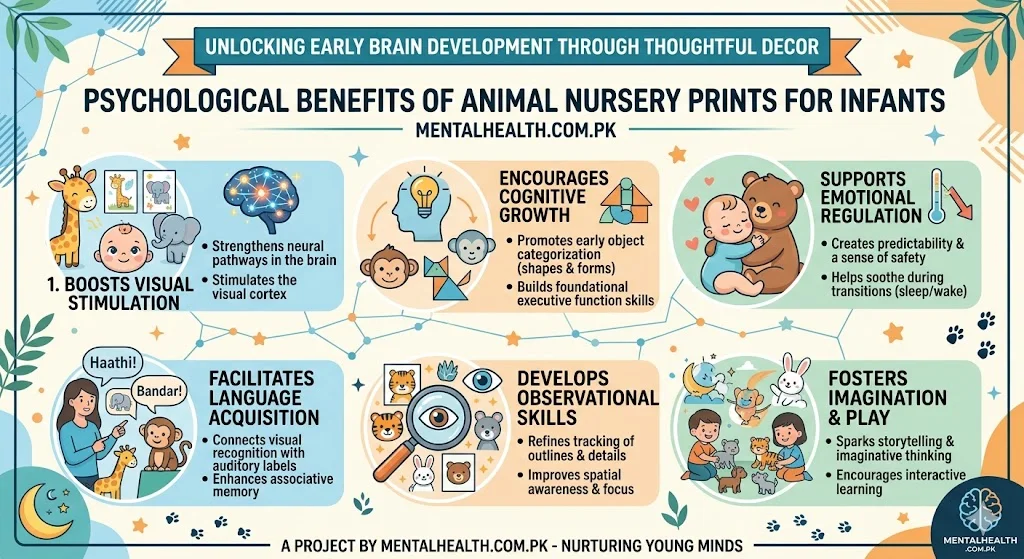
Animal nursery prints are deliberately designed artwork featuring biological forms, which serve to stimulate an infant’s visual cortex. By presenting clear shapes and contrasting colors, these prints capture a baby’s developing attention span. This focused attention is the foundational building block for all subsequent cognitive learning and memory retention.
The Role of Biological Shapes in Cognitive Development
Human brains are evolutionarily wired to recognize and respond to biological forms, especially faces and animal silhouettes. When babies look at animal illustrations, they engage in early categorization, an essential executive function. Differentiating between a round bear and a tall giraffe requires complex cognitive processing for a young infant.
In my clinical practice, parents often notice their infants staring intently at specific nursery characters. This sustained gaze is not merely passive observation but active neural processing. The infant is learning to track outlines, perceive depth, and mentally organize the visual data present in their immediate physical environment.
Why Are Animal Nursery Prints So Effective for Learning?
The effectiveness of these specific prints lies in their balance of simplicity and novelty. Newborns have limited visual acuity, making high-contrast, distinct shapes much easier to process than overly complex scenes. As their vision matures, the distinct features of various animals continue to provide appropriately challenging visual input.
Research in developmental psychology consistently demonstrates that moderate visual complexity optimizes infant attention. If an image is too simple, the brain loses interest quickly. If it is too chaotic, the infant becomes overstimulated and turns away. Well-designed animal artwork perfectly hits this developmental sweet spot for sustained cognitive engagement.
Emotional Regulation and Familiarity in the Nursery
Beyond cognitive growth, the nursery environment significantly impacts an infant’s developing nervous system and emotional regulation. Consistent visual markers in an infant’s room create a sense of predictability and safety. Recognizing familiar animal shapes on the wall helps soothe a child during transitions, such as waking up or falling asleep.
This sense of environmental predictability lowers cortisol levels, which is the primary stress hormone in the body. When babies feel secure in their physical space, their brains can dedicate more energy to learning and development. The gentle presence of familiar visual stimuli effectively functions as a passive emotional anchor.
Linking Visuals to Language Acquisition
As infants transition into toddlerhood, the artwork in their room takes on a new psychological function related to language. Parents naturally point to and name the animals depicted on the walls during daily routines. This interaction bridges the gap between visual recognition and early receptive language skills.
The routine of saying “goodnight to the elephant” or “look at the bunny” reinforces associative memory. Children learn to connect auditory labels with visual symbols long before they can speak the words themselves. The nursery decor thus transforms from a visual stimulant into a highly interactive linguistic tool.
Conclusion
Designing a nursery is a deeply personal journey that perfectly blends aesthetic preferences with developmental needs. Understanding the psychological impact of your design choices validates the care you put into creating this space. Your baby’s visual environment truly serves as the foundation for their earliest cognitive and emotional milestones.
By incorporating thoughtfully selected animal artwork, you are providing essential stimuli that foster brain growth, emotional security, and future language skills. Trust your instincts as you build a welcoming environment for your child. A carefully curated space will beautifully support their psychological development through those crucial early years.
Key Takeaways
- Visual stimulation from nursery artwork directly supports the formation of early neural connections.
- High-contrast animal shapes perfectly match the visual processing capabilities of developing infants.
- Familiar biological forms in a room promote emotional security and lower infant stress levels.
- Recognizing distinct animal figures serves as an early exercise in cognitive categorization.
- Pointing to and naming nursery art provides a strong foundation for early language acquisition.
References
- Bornstein, M. H., & Arterberry, M. E. (2010). The development of object categorization in young children: Hierarchical inclusiveness, age, maternal perceptual priming, and object novelty. Developmental Psychology, 46(2), 350-365.
- Fantz, R. L. (1963). Pattern vision in newborn infants. Science, 140(3564), 296-297.
- Gliga, T., & Csibra, G. (2007). Seeing the face through the eyes: A developmental perspective on face expertise. Progress in Brain Research, 164, 323-339.
- Rakison, D. H., & Poulin-Dubois, D. (2001). Developmental origin of the animate-inanimate distinction. Psychological Bulletin, 127(2), 209-228.
- Tamis-LeMonda, C. S., Kuchirko, Y., & Song, L. (2014). Why is infant language learning facilitated by parental responsiveness? Current Directions in Psychological Science, 23(2), 121-126.