
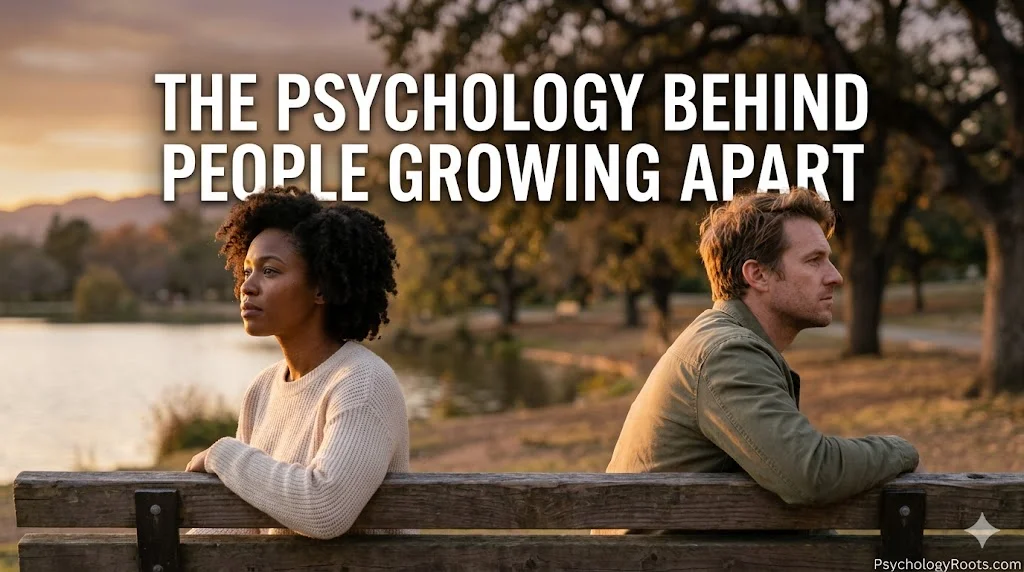
The Psychology Behind People Growing Apart: Signs, Mechanisms, and How to Reconnect
The quiet drift between two partners is often far more destructive than a sudden or explosive argument. In clinical practice, the phenomenon of people growing apart rarely happens overnight. It is usually the result of microscopic fractures in communication and unresolved emotional needs that accumulate over months or years.
Couples often arrive in therapy wondering where the intimacy went, not realizing that their own defensive behaviors have built a wall between them. Understanding the psychological mechanisms that drive relationship disconnects is vital. By recognizing these underlying patterns, you can begin the necessary work of bridging the gap and fostering genuine reconnection.
Understanding the Clinical Reality of People Growing Apart
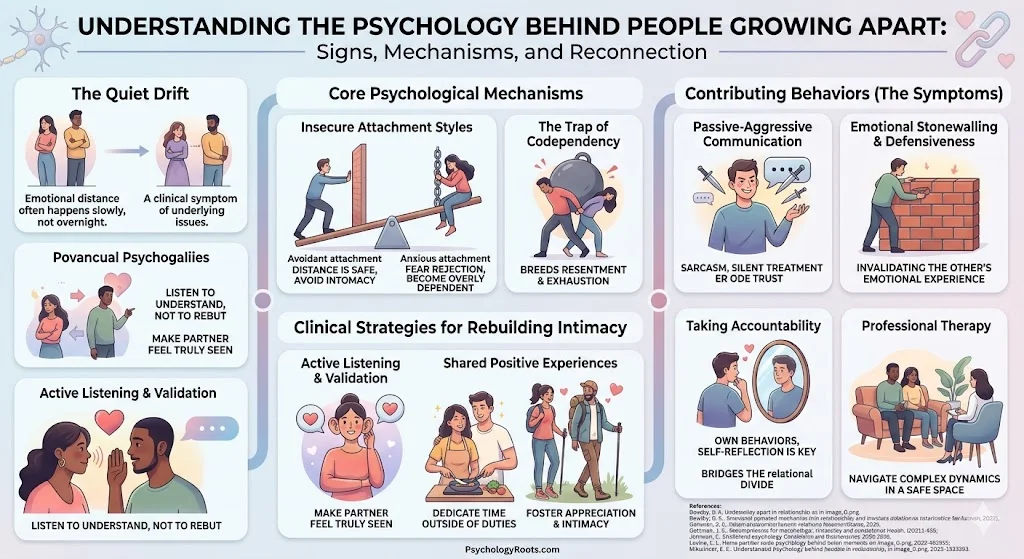
Emotional distance occurs when partners stop turning toward each other for comfort, validation, or shared joy. It is a protective mechanism triggered by repeated emotional injuries or unmet expectations. This disconnect fundamentally alters the dynamic of the partnership and breeds a pervasive sense of loneliness within the relationship.
Research in relationship psychology highlights that growing apart is not an inevitable phase of long-term commitment. Instead, it serves as a clinical symptom of underlying dysfunctions like poor conflict management or attachment insecurities. Recognizing these root causes is the first critical step toward healing the relational divide.
Core Psychological Mechanisms Driving Emotional Distance
Insecure Attachment Styles
Our early childhood experiences deeply influence how we connect with romantic partners in adulthood. Individuals with an avoidant attachment style often equate emotional intimacy with a loss of independence. When the relationship becomes serious, they subconsciously create distance to protect themselves from perceived vulnerability or control.
Conversely, those with an anxious attachment style may become overly dependent and hypersensitive to any signs of rejection. Their intense fear of abandonment often leads to clingy behaviors that inadvertently push their partner away. This creates a painful cycle where one partner pursues while the other continuously retreats.
The Trap of Codependency
Codependency is a dysfunctional relational pattern where one person consistently sacrifices their own needs to accommodate their partner. This imbalance may initially look like extreme devotion, but it eventually breeds deep resentment and exhaustion. The codependent individual often feels unappreciated and may resort to passive-aggressive behaviors to express their dissatisfaction.
The psychological toll of codependency accelerates the process of partners drifting away from one another. Because true intimacy requires two whole and emotionally autonomous individuals, enmeshment inevitably suffocates the romantic connection. Healthy relationships demand strong personal boundaries that allow both individuals to maintain their unique identities and self-worth.
Are Your Own Behaviors Contributing to the Disconnect?
It requires immense courage to look inward and ask if your own actions are damaging the relationship. Self-awareness is the cornerstone of psychological growth and relationship repair. If you find yourself constantly criticizing your partner or starting arguments over trivial matters, you might be displacing deeper unresolved frustrations.
Passive-Aggressive Communication
Direct communication is the lifeblood of a healthy partnership. When individuals struggle to express their anger or disappointment openly, they often resort to passive-aggressive tactics like sarcasm or the silent treatment. These indirect expressions of hostility create an environment of profound psychological unsafety and confusion.
Consistently withholding affection or using subtle jabs erodes trust over time. Your partner is left guessing what went wrong, which prevents any meaningful conflict resolution. Learning to state your needs and frustrations clearly is essential for rebuilding emotional safety and mutual respect in the relationship.
Emotional Stonewalling and Defensiveness
Stonewalling occurs when a listener completely withdraws from the interaction, shutting down dialogue to avoid feeling overwhelmed. While it may feel like a necessary defense mechanism in the moment, it communicates intense rejection to the other person. This behavior stops vital communication dead in its tracks.
Defensiveness is equally toxic to relationship longevity and mutual trust. When you respond to a partner’s valid complaint by immediately shifting the blame back onto them, you invalidate their emotional experience. Taking genuine accountability for your part in the conflict is essential for preventing further emotional separation and resentment.
Clinical Strategies for Rebuilding Intimacy
Reversing the trend of disconnection requires intentional effort and a willingness to embrace vulnerability. Couples must practice active listening, which involves fully concentrating on what is being said rather than simply preparing a rebuttal. Validation is a powerful clinical tool that helps your partner feel truly seen and understood.
Rebuilding trust also means dedicating time to shared positive experiences that exist outside of relationship maintenance or household logistics. Fostering a culture of appreciation and prioritizing physical and emotional intimacy can slowly repair the damaged bond. Professional couples counseling offers a structured and safe environment to navigate these complex changes.
Conclusion
The realization that you and your partner are drifting can evoke a profound sense of grief and anxiety. However, acknowledging this distance is not an admission of failure. It is an invitation to engage in deeper psychological work and redefine how you relate to one another on a daily basis.
By examining your attachment patterns and taking ownership of unhelpful communication styles, you can begin to shift the dynamic. Relationships are living systems that require constant nurturing, adaptation, and grace. With mutual commitment and self-reflection, the chasm between you can become the foundation for a more mature and resilient connection.
Key Takeaways
- Emotional distance often stems from self-protective mechanisms rather than a natural loss of love.
- Unresolved attachment insecurities significantly drive the painful cycle of pursuing and distancing in partnerships.
- Passive-aggressive behaviors and stonewalling destroy emotional safety and prevent meaningful conflict resolution.
- Reversing the drift requires mutual accountability, active listening, and intentional vulnerability from both individuals.
- Professional therapy can provide the necessary framework to navigate complex relational dynamics effectively.
References
- Bowlby, J. (1982). Attachment and loss: Vol. 1. Attachment (2nd ed.). Basic Books.
- Gottman, J. M., & Silver, N. (2015). The seven principles for making marriage work: A practical guide from the country’s foremost relationship expert. Harmony Books.
- Johnson, S. M. (2008). Hold me tight: Seven conversations for a lifetime of love. Little, Brown Spark.
- Levine, A., & Heller, R. (2010). Attached: The new science of adult attachment and how it can help you find and keep love. TarcherPerigee.
- Mikulincer, M., & Shaver, P. R. (2016). Attachment in adulthood: Structure, dynamics, and change (2nd ed.). Guilford Press.