
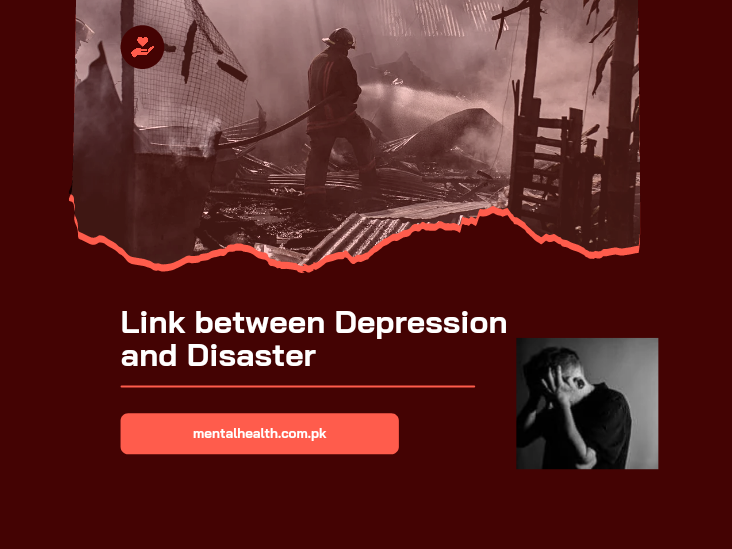
Depression and disaster are closely linked: when floods, earthquakes, storms, or wildfires strike, the effects reach far beyond damaged homes and disrupted services. Losing a home, a livelihood, or a loved one, and living for months with uncertainty, can weigh heavily on mental health. This article explains how depression and disaster are connected, what research suggests, who may be most affected, and where to find support.
This article is for information only and is not medical advice. It does not diagnose or treat any condition.
Key Takeaways
- Natural disasters can affect mental health long after the immediate danger has passed.
- Loss, displacement, financial strain, and uncertainty are among the main pressures that follow a disaster.
- Depression after a disaster is common and understandable, and it is not a sign of weakness.
- People who were already facing hardship, including poverty and limited support, may be more affected.
- Support from family, community, and professionals, along with practical help, can aid recovery.
- If low mood persists or makes daily life difficult, speaking with a healthcare professional is an important step.
How Do Disasters Affect Mental Health?
A disaster disrupts almost every part of daily life at once. Homes and belongings may be damaged or lost, work may stop, schools may close, and familiar routines disappear. In the days after an event, people often focus on safety, shelter, and basic needs. Once the immediate danger passes, the emotional impact can become clearer.
Depression can develop gradually in this setting. Grief for people who were lost, worry about the future, and the effort of rebuilding can leave a person exhausted and low. Some people find it hard to sleep, lose their appetite, or lose interest in things they used to enjoy. Others feel guilty for surviving when others did not, or feel helpless in the face of so much damage. These reactions are human responses to a difficult experience, and they do not mean a person has failed in any way.
The Link Between Depression and Disaster
The connection between depression and disaster works through several pressures at once. The first is loss: of loved ones, homes, possessions, jobs, and the sense of safety that comes from a familiar place. The second is disruption: moving to temporary shelter, changing schools or workplaces, and losing contact with neighbours and friends can weaken the social connections that normally help people cope.
The third is uncertainty. Recovery after a disaster often takes months or years, and it is rarely straightforward. Waiting for aid, repairs, or a decision about where to live can keep stress high for a long time. The fourth is financial strain. When income is lost and costs rise, worry about money can add to low mood and make it harder to seek help.
Climate change is also part of this picture. As extreme weather becomes more frequent in many parts of the world, more communities face repeated floods, heatwaves, storms, and droughts. For people who have already lived through one disaster, each new event can bring back earlier distress and make recovery harder.
What Does the Research Suggest?
Research on disasters and mental health is still growing, and much of it comes from studies carried out after specific events. Taken together, these studies suggest that people living in disaster-affected areas are more likely to experience depression and anxiety than people in unaffected areas, and that the risk can remain higher for months or years after the event.
One study from South Africa looked at this question using survey data collected over several years. Researchers examined information from thousands of people and explored whether experiencing a disaster in the community, such as a flood, was linked with depression later in life. They found a link between early exposure to disasters and later depression, and they found that the link appeared stronger for people who were already facing social and economic hardship, including people with lower incomes and less formal education, and for women. The study also noted that people who experienced more than one disaster seemed more vulnerable to later mental health difficulties.
These findings fit with what other research has shown: disasters do not affect everyone equally. People with fewer resources, weaker social support, or existing health difficulties may have a harder time recovering. It is also worth remembering that this was an observational study, so it shows a link rather than proving that disaster exposure alone causes depression. Many factors shape mental health, and disaster is one of them.
Who May Be Most Affected?
Anyone can struggle after a disaster, but some people may face greater risk. These include:
- People who lost a loved one or who were injured during the disaster.
- People who lost their home or livelihood and face a long, uncertain recovery.
- Children and older people, who may depend on others for care and stability.
- People with existing mental or physical health conditions, whose care may have been disrupted.
- People with limited income or support, who may have fewer options for rebuilding.
- Emergency workers and volunteers, who may have witnessed distressing events while helping others.
Children may show distress in different ways from adults, such as changes in behaviour, sleep, or schoolwork. Older people may find it harder to rebuild social connections after displacement. Paying attention to these groups, and checking in with them over time rather than only in the first days, can make a real difference.
Coping and Recovery After a Disaster
Recovery is rarely a straight line, and it is normal for progress to feel slow. Some steps that can help include:
- Restoring routines: Regular meals, sleep, and daily activities can bring a sense of stability.
- Staying connected: Talking with family, friends, and neighbours, and accepting help when it is offered, can ease isolation.
- Taking recovery one step at a time: Breaking large tasks, such as repairs or paperwork, into smaller steps can make them feel more manageable.
- Limiting distressing news: Following updates is important, but constant exposure to images of destruction can add to distress.
- Looking after physical health: Eating as well as possible, drinking enough water, and moving gently each day support both body and mind.
- Seeking practical help: Support with housing, income, and paperwork can reduce the pressures that weigh on mood.
Communities also recover better together. Neighbourhood groups, faith communities, schools, and local organisations can provide practical help and a sense of belonging. In Pakistan, where floods have affected many communities in recent years, local support networks and relief efforts have played an important part in helping people rebuild.
When to Seek Support
Consider speaking with a doctor or mental health professional if low mood lasts for more than a couple of weeks, affects sleep, appetite, work, or relationships, or makes everyday tasks feel difficult. You do not need to have a diagnosis to ask for help, and reaching out early can make recovery easier.
If you feel you may act on thoughts of harming yourself, please reach out right away. In the United States, you can call or text 988 to reach the Suicide and Crisis Lifeline. In Pakistan, you can call the National Youth Helpline at 0800-69457. You can also contact a trusted person, a local doctor, or emergency services in your area.
Frequently Asked Questions
Can a natural disaster cause depression?
A disaster can contribute to depression, especially when it involves loss, displacement, financial strain, and long-term uncertainty. Depression after a disaster is a recognised response, and it can develop weeks or months after the event.
How long does depression after a disaster last?
There is no set timeline. Some people recover within weeks or months as life stabilises, while others need longer and benefit from professional support. If low mood persists or worsens, it is worth speaking with a healthcare professional.
Is it normal to feel low after a disaster even if I was not harmed?
Yes. Losing a home, a routine, or a sense of safety can affect anyone, including people who were not physically hurt. Witnessing destruction and worrying about loved ones can also take a toll.
How can I help someone who is struggling after a disaster?
Listen without judging, check in regularly, and offer practical help such as meals, transport, or help with paperwork. Encourage the person to seek professional support if low mood persists, and do not expect them to recover quickly.
Do children experience depression after disasters?
Children can be affected too, though they may show it differently, for example through changes in behaviour, sleep, appetite, or schoolwork. Keeping routines steady, listening to their worries, and seeking professional advice if concerns persist can help.
Where can I find support after a disaster in Pakistan?
You can speak with a local doctor or mental health professional, and you can call the National Youth Helpline at 0800-69457. Community groups, relief organisations, and local health services can also help with practical support and guidance.
Reviewed by Aamir Ranjha