
Electroconvulsive therapy and cognition is a pairing that worries many people who are considering ECT. Will the treatment that lifts severe depression also harm memory and thinking? A study published in the American Journal of Geriatric Psychiatry looked at exactly that question, and its findings are reassuring in some ways and cautionary in others.
The researchers analysed data from Massachusetts General Hospital, following 684 patients who had an acute course of ECT with a Mecta Spectrum 5000Q device between 2011 and 2019. They grouped patients by how their thinking and memory were functioning before treatment, then compared depression outcomes and cognitive outcomes after treatment. This article explains what they found, what it means, and what the study could not show.
Key Takeaways
- In a study of 684 patients, how well someone’s thinking and memory worked before ECT did not predict how much their depression would improve.
- Overall, average scores on the Montreal Cognitive Assessment (MoCA) did not change significantly after 10 ECT treatments.
- People who started with normal cognition saw a small average drop in MoCA scores, while people who started with impaired cognition saw a small average improvement.
- Patients whose thinking was already impaired were more likely to see their cognition improve with treatment than to see it worsen.
- The study used the MoCA, which cannot measure autobiographical memory loss — a key concern with ECT — so that question remains open.
- ECT is usually considered when other treatments have not worked, and the decision should always be made with a psychiatrist who can weigh the benefits and risks for the individual.
What Is Electroconvulsive Therapy?
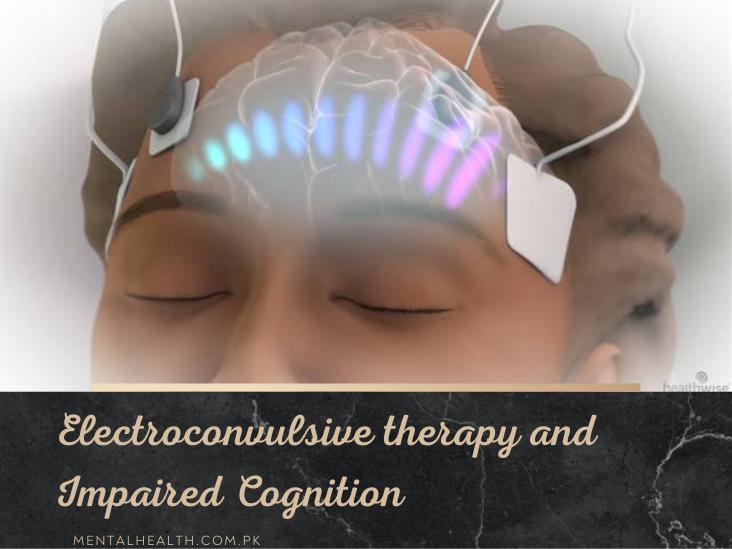
Electroconvulsive therapy, or ECT, is a medical treatment in which a brief, controlled electrical current is passed through the brain while the patient is under general anaesthesia, producing a short seizure. It sounds daunting, and it carries a heavy reputation, but modern ECT is a recognised treatment for severe depression, especially when medication and talking therapy have not helped, when symptoms are life-threatening, or when a rapid response is needed.
ECT is usually given as a course of treatments, often around 6 to 12 sessions over a few weeks. Muscle relaxants and anaesthesia are used, and the patient is monitored throughout. The most commonly discussed side effects are confusion shortly after a session and gaps in memory, particularly for events around the time of treatment. That is why the question of cognition — thinking, memory and concentration — matters so much to patients and their families.
What the Study Looked At
The study was a retrospective analysis of data from Massachusetts General Hospital. The researchers examined the cognition and depression outcomes of 684 patients who had an acute course of ECT with a Mecta Spectrum 5000Q device between 2011 and 2019, grouping patients by their baseline cognitive performance.
Most of the patients had major depressive disorder (76.6 percent) or bipolar affective disorder (19.7 percent). Just over half (57.0 percent) were female. Nearly half (45.3 percent) had been psychiatrically hospitalised within the previous six months. In terms of thinking and memory before treatment, 54.2 percent were cognitively normal, 43.4 percent had mild cognitive impairment, and 2.3 percent had moderate cognitive impairment.
Cognition was measured with the Montreal Cognitive Assessment, known as the MoCA, a short test of memory, attention, language and visuospatial skills. Depression was measured with the Quick Inventory of Depressive Symptomology, or QIDS.
What the Study Found
Cognition at the start did not predict depression outcomes
After ECT, baseline cognition had no effect on depressive outcomes. In other words, whether a patient’s thinking and memory were normal or impaired before treatment made no significant difference to how much their depression improved. Cognition did not appear to be a significant predictor of depression symptoms, and patients with major depressive disorder and bipolar affective disorder had similar outcomes when the results were split by diagnosis.
That matters because it suggests ECT can help people with depression even when their thinking is already affected — a group that might otherwise be assumed to respond poorly.
Thinking scores moved in different directions
Overall, there was no significant change in average MoCA scores after 10 ECT treatments. But the average hid two opposite movements. Among patients who started with normal cognition, MoCA scores fell by an average of 1.44 points. Among patients who started with impaired cognition, MoCA scores rose by an average of 1.72 points.
Put simply, people whose thinking was already impaired were more likely to see their cognition improve with treatment, whereas people whose thinking was normal were more likely to see a small decline. One likely explanation is that depression itself impairs thinking: as the depression lifts, thinking recovers, and that recovery can outweigh any direct effect of the treatment. In people whose thinking was already fine, there is no such recovery to offset the effect, so a small decline shows up.
Hospital stay made a difference to symptom relief
In patients who had recently been hospitalised, QIDS depression ratings fell more sharply than in those who had not been hospitalised. That may reflect more severe illness at the start, closer monitoring, or both — the study design cannot say which. It is a reminder that averages across a whole group can hide real differences between subgroups.
What the Study Could Not Show
The study may have been limited by its choice of measure. The MoCA is a brief screening test, and it cannot account for autobiographical memory loss — difficulty recalling personal events and experiences — which is a key domain affected by ECT and one of the side effects patients worry about most. A stable MoCA score does not rule out gaps in personal memory.
The study was also retrospective, meaning the researchers analysed records of treatment that had already happened rather than assigning patients to groups in advance. That design is useful for large, real-world samples, but it cannot control for every difference between patients the way a randomised trial can.
What This Means If You Are Considering ECT
If you are weighing ECT, the study offers a balanced picture. It suggests that starting treatment with impaired thinking does not mean ECT will fail to help your depression, and that cognition may even improve as depression lifts. At the same time, a small average decline in thinking scores among people who started with normal cognition is a real finding, and it is one to discuss openly with your psychiatrist.
Useful questions to ask include: what type of ECT is planned and how many sessions are expected; how memory and thinking will be checked before, during and after the course; what the alternatives are; and what support is available if memory problems appear. Bringing a family member or trusted person to the discussion can help, since they may notice changes you miss.
ECT is not a first step for most people. It is usually considered when other treatments have not worked or when symptoms are severe. The decision is always individual, and it should be made with a psychiatrist who knows your history.
When to Seek Help
If depression is making daily life hard, or if thoughts of harming yourself appear, reach out promptly to your doctor, a psychiatrist or a mental health service. You do not need to decide about a treatment like ECT on your own — a professional can explain the options and help you weigh them.
If you feel you might act on thoughts of harming yourself, seek help right away. In the United States, call or text 988 to reach the Suicide and Crisis Lifeline. In Pakistan, the National Youth Helpline offers free psychosocial support and counselling at 0800-69457. If you are elsewhere, contact your local crisis helpline or emergency services.
Frequently Asked Questions
Does ECT damage thinking and memory?
ECT can affect memory, particularly for events around the time of treatment, and some people notice confusion after sessions. In the study described here, average thinking scores on the MoCA did not change significantly after 10 treatments, but people who started with normal cognition saw a small average decline, so the effect is real and worth discussing with your psychiatrist.
Can ECT help if my thinking is already impaired?
According to this study, yes. Baseline cognition did not predict how much depression improved, and patients who started with impaired cognition were more likely to see their thinking scores improve than worsen, possibly because treating the depression itself restored some thinking ability.
What is the MoCA test?
The Montreal Cognitive Assessment is a short screening test of memory, attention, language and visuospatial skills. It is useful for tracking general thinking ability, but it does not measure autobiographical memory — recall of personal life events — which is the area of memory most affected by ECT.
How many ECT sessions are usually given?
A typical acute course is around 6 to 12 sessions over a few weeks, although the exact number depends on the individual, the severity of symptoms and how they respond. Your psychiatrist will plan the course with you.
Is ECT only used when other treatments fail?
Usually, yes. ECT is most often considered when medication and talking therapy have not worked, when depression is severe or life-threatening, or when a rapid improvement is needed. It is a decision made with a psychiatrist, not a first-line option for mild depression.
What should I ask my doctor before ECT?
Ask what type of ECT is planned, how many sessions are expected, how memory and thinking will be monitored, what the alternatives are, and what happens if memory problems appear. Bringing someone you trust to the appointment can help you remember the discussion and notice changes afterwards.
Reviewed by Aamir Ranjha. This article is for information only and is not a substitute for professional medical advice, diagnosis or treatment.