
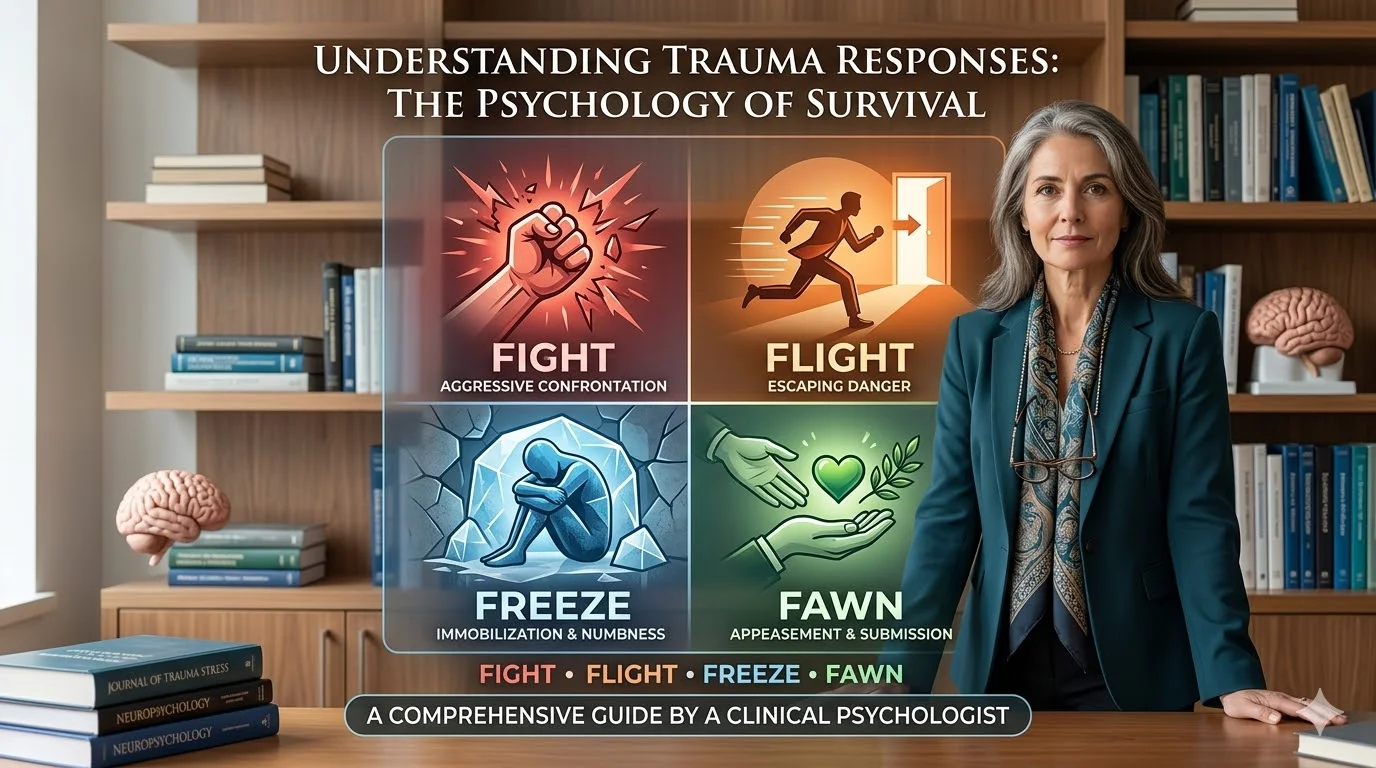
The Psychology of Survival: Understanding Trauma Responses
The primary function of the human brain is not to ensure happiness, but to guarantee survival. When faced with perceived danger, the body instantly activates an ancient and powerful defense mechanism. Many clients ask for a comprehensive fight flight freeze fawn pdf to better understand these automatic physiological shifts. This clinical guide provides an in-depth look at how our autonomic nervous system protects us from harm.
These trauma responses are automatic, involuntary physiological reactions designed to keep us alive during highly stressful or threatening situations. They occur without conscious thought, governed by a complex network of nerves and hormones. Recognizing these patterns is the first step toward healing and regaining a sense of safety.
The Autonomic Nervous System and Threat Detection
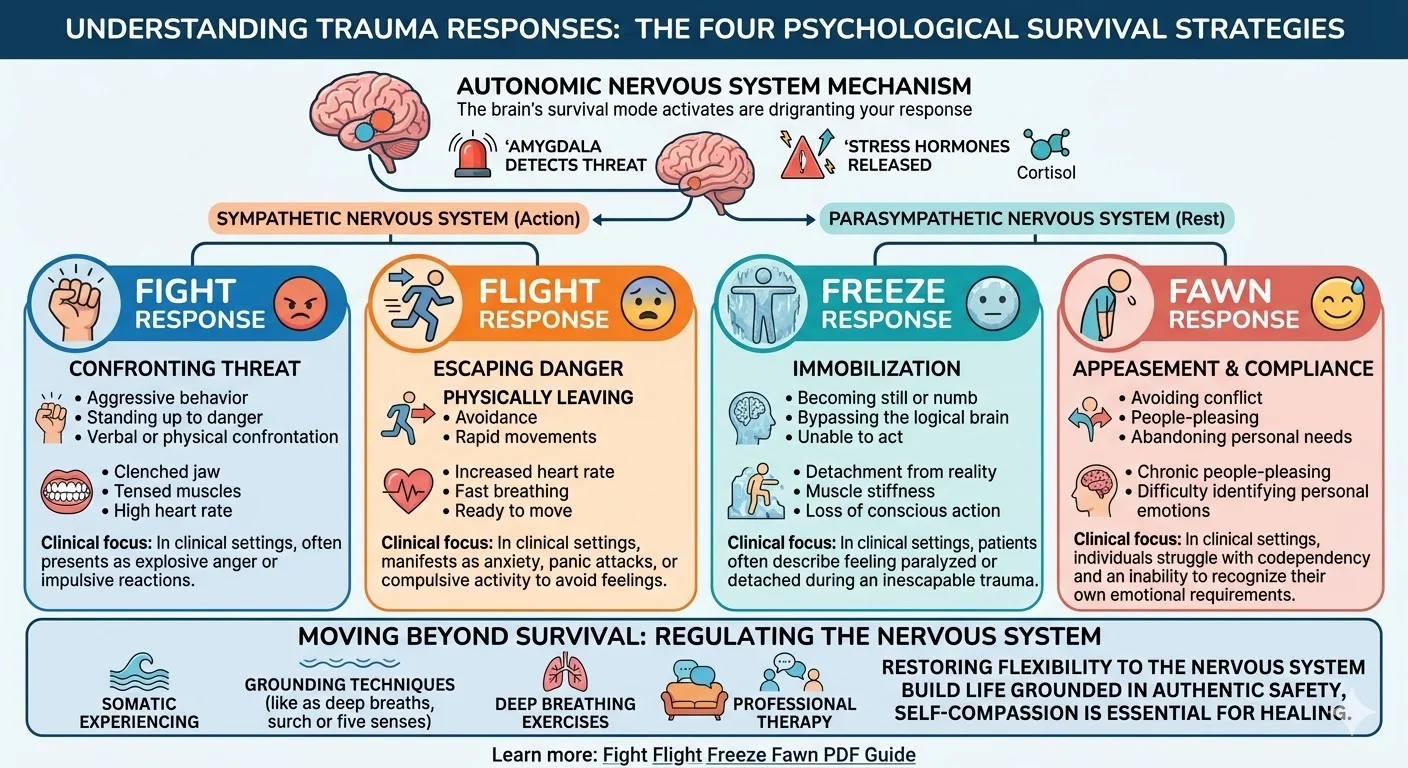
The autonomic nervous system operates constantly to monitor our environment for safety or danger. It consists of two main branches. The sympathetic nervous system acts as the accelerator, preparing the body for action. The parasympathetic nervous system serves as the brake, helping the body rest and digest.
When the amygdala detects a threat, it bypasses logical processing in the prefrontal cortex. It immediately signals the release of stress hormones like cortisol and adrenaline. This rapid chemical cascade results in distinct survival strategies that dictate our immediate behavior, physical sensations, and emotional state during a crisis.
What Are the Four Primary Trauma Responses?
The Fight Response: Confronting the Threat
The fight response is an active defense mechanism characterized by confronting a threat head-on. Physiologically, blood flows to the major muscles, the jaw clenches, and the posture becomes aggressive. The goal is to overpower the source of danger through physical force or verbal confrontation. In clinical settings, we often see this manifest as intense anger or explosive outbursts.
The Flight Response: Escaping the Danger
The flight response involves physically removing oneself from a dangerous situation. The body prepares for rapid movement by increasing heart rate and respiration to oxygenate the muscles. The primary objective is to escape harm when fighting is not a viable option. Individuals stuck in chronic flight mode often experience severe anxiety, panic attacks, or a compulsive need to stay busy to avoid uncomfortable feelings.
The Freeze Response: Immobilization
The freeze response occurs when neither fighting nor fleeing is possible. The nervous system becomes overwhelmed, leading to a state of immobilization or numbness. This biological shutting down acts as a protective mechanism, reducing physical pain and emotional awareness during an inescapable trauma. Clients frequently describe feeling paralyzed, detached from reality, or unable to make simple decisions when triggered into a freeze state.
The Fawn Response: Appeasement and People-Pleasing
The fawn response is a complex survival strategy often developed in childhood to pacify abusive or unpredictable caregivers. It involves appeasing a threat by abandoning personal boundaries and seeking to please the aggressor. This behavior minimizes conflict but severely damages an individual’s sense of identity. Those who habitually fawn struggle with extreme people-pleasing, codependency, and an inability to recognize their own emotional needs.
How Trauma Responses Manifest in Daily Life
In clinical practice, recognizing these behaviors helps demystify confusing or distressing symptoms. A person might act aggressively during a minor disagreement due to an activated fight response. Alternatively, they might completely withdraw from a stressful work environment, indicating a flight or freeze reaction. Understanding these behaviors as biological survival tactics removes shame and allows for profound self-compassion.
How Can We Regulate the Nervous System?
Moving out of a chronic survival state requires targeted interventions that signal safety to the brain. Somatic experiencing, deep breathing exercises, and grounding techniques can effectively downregulate an overactive sympathetic nervous system. Therapy provides a secure environment to process underlying trauma. Gradually, individuals can train their autonomic responses to return to a baseline of calm, improving their overall mental health and interpersonal relationships.
Conclusion
Healing from trauma is not about eliminating these survival responses, but rather about restoring flexibility to the nervous system. Your body functioned exactly as designed to protect you during times of distress. By learning to identify your physiological cues, you can begin to choose mindful reactions instead of automatic reflexes. Professional support and psychoeducation empower individuals to reclaim their emotional well-being and build a life grounded in authentic safety.
Key Takeaways
- Fight involves aggressively confronting a threat to overpower it.
- Flight centers on escaping danger by physically leaving the environment.
- Freeze results in temporary immobilization or dissociation when overwhelmed.
- Fawn is a strategy of appeasing an aggressor to avoid conflict.
- These responses are involuntary functions of the autonomic nervous system.
- Recognizing your survival patterns is essential for emotional regulation.
References
- Cannon, W. B. (1932). The wisdom of the body. W. W. Norton & Company.
- Levine, P. A. (2010). In an unspoken voice: How the body releases trauma and restores goodness. North Atlantic Books.
- Porges, S. W. (2011). The polyvagal theory: Neurophysiological foundations of emotions, attachment, communication, and self-regulation. W. W. Norton & Company.
- Van der Kolk, B. A. (2014). The body keeps the score: Brain, mind, and body in the healing of trauma. Viking.
- Walker, P. (2013). Complex PTSD: From surviving to thriving: A guide and map for recovering from childhood trauma. Azure Coyote Publishing.