
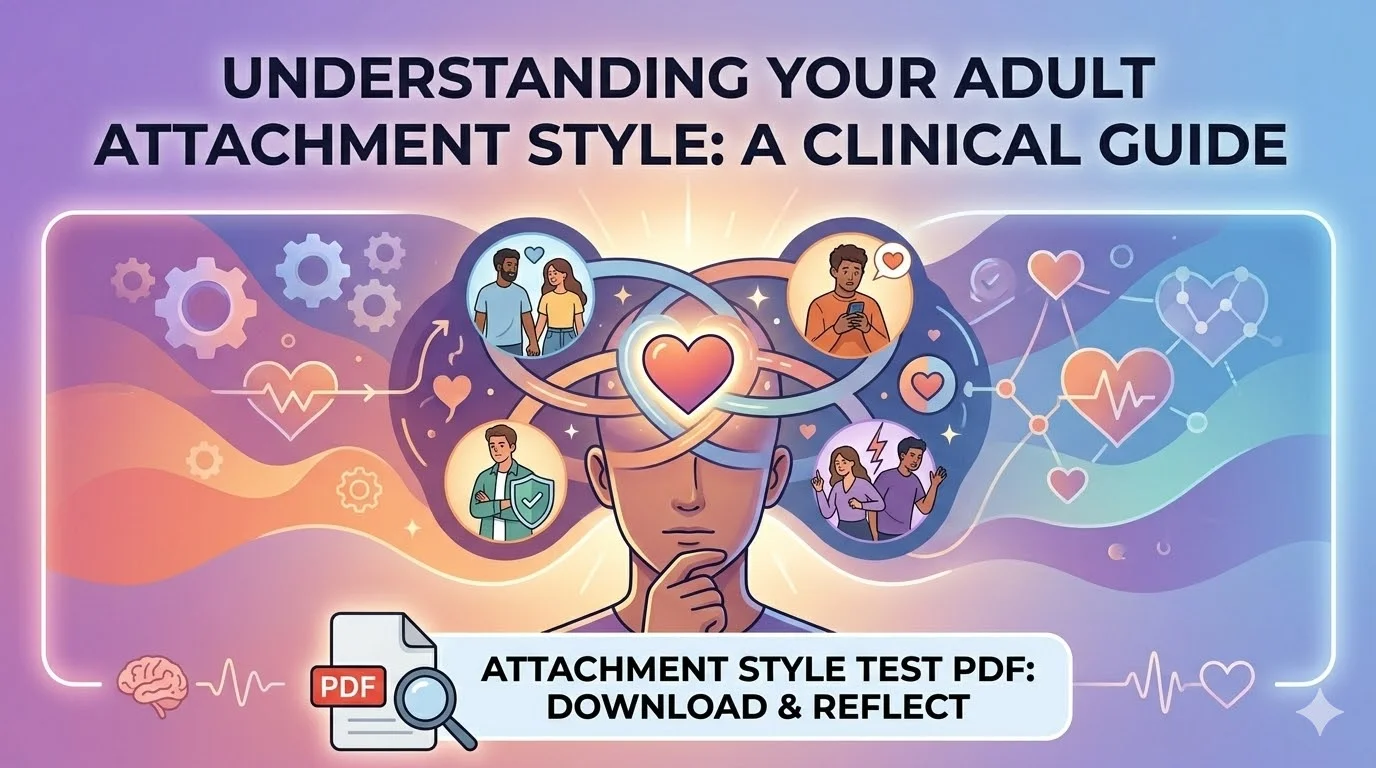
Understanding Your Relationship Patterns Through Attachment Theory
Human connection is a fundamental need, yet many individuals find themselves trapped in recurring cycles of relationship distress. Whether you experience anxiety when a partner pulls away or an instinct to retreat when intimacy deepens, these reactions are rarely random. Utilizing an attachment style test pdf provides a framework for exploring these intricate dynamics. Recognizing these patterns is the first step toward building healthier bonds.
Attachment theory is a psychological model describing the dynamics of long-term interpersonal relationships. Developed initially by John Bowlby and expanded by Mary Ainsworth, this theory explains how early experiences with caregivers shape our expectations of emotional availability. These early working models become the blueprint for how we navigate vulnerability, trust, and intimacy in adult relationships.
The psychological mechanisms underlying attachment involve the regulation of our internal threat response system. When we perceive a threat to our primary relational bonds, our attachment system activates to seek proximity and safety. How we express this need depends heavily on our learned attachment style. Some individuals amplify their distress to ensure a response, while others suppress their needs to avoid rejection.
What Are the Four Primary Adult Attachment Styles?
Secure Attachment
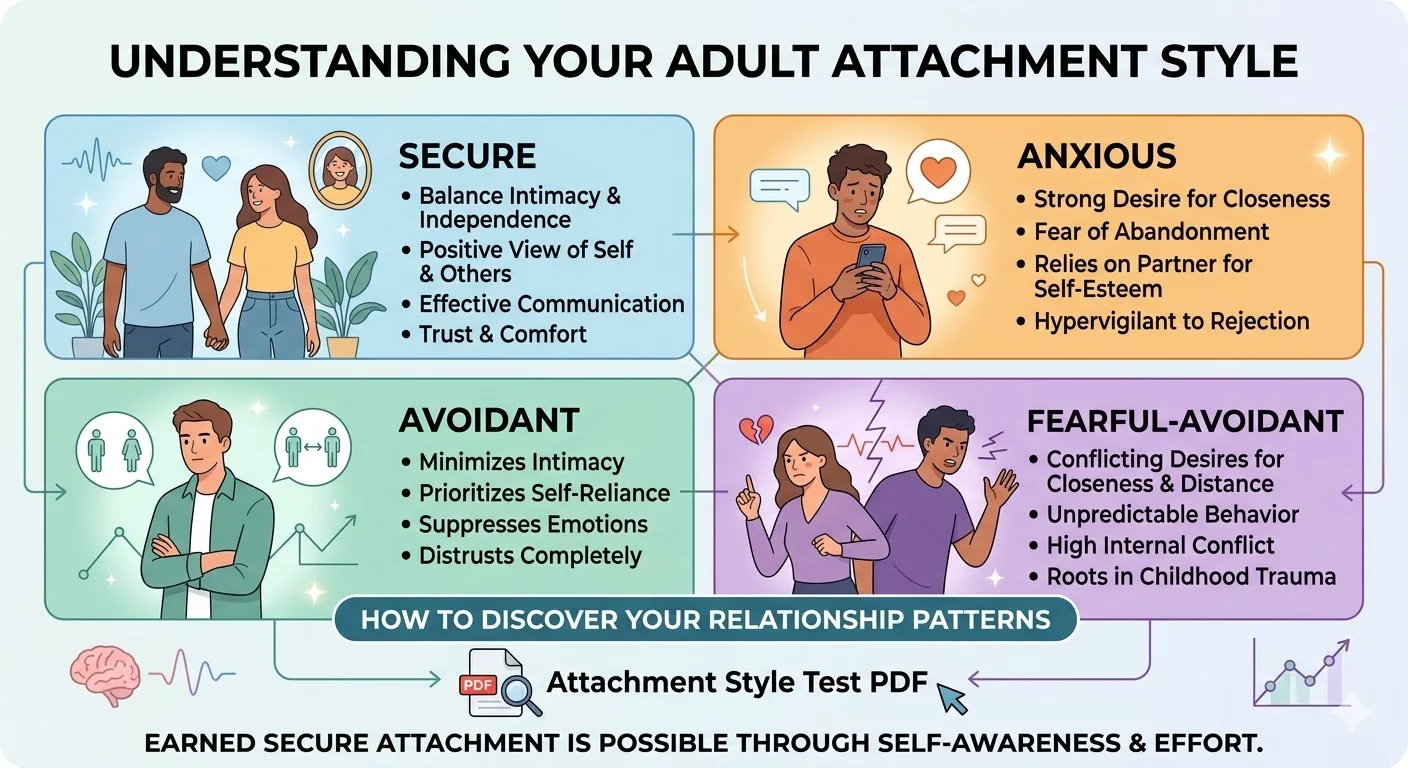
Secure attachment is characterized by a comfortable balance between intimacy and independence. Individuals with a secure pattern view themselves as worthy of love and perceive others as generally trustworthy and responsive. They can communicate their emotions effectively without relying heavily on their partner for continuous validation. In clinical practice, we observe that secure individuals navigate relationship conflicts with resilience and collaboration.
Anxious Attachment
Anxious attachment involves a strong desire for closeness coupled with a persistent fear of abandonment. Individuals with this style often experience heightened emotional responses and rely heavily on their partner to regulate their self-esteem. They may interpret minor shifts in a partner’s mood as a sign of impending rejection. This hypervigilance often leads to clingy behaviors as they seek constant reassurance to soothe their internal anxiety.
Avoidant Attachment
Avoidant attachment is an emotional pattern where an individual minimizes the importance of intimate relationships as a self-protective measure. These individuals often prioritize extreme self-reliance over seeking emotional support from others. They tend to suppress their emotions and may feel overwhelmed or suffocated when a partner attempts to get too close. This distance serves as a psychological shield against potential vulnerability and disappointment.
Fearful-Avoidant Attachment
Fearful-avoidant attachment presents conflicting desires for profound closeness and protective distance. Often rooted in early trauma or profoundly inconsistent caregiving, this style leaves individuals wanting intimacy but terrified of the potential pain it might bring. This internal conflict typically results in unpredictable relationship behaviors. They may pull a partner close only to push them away when the emotional intensity feels unsafe or overwhelming.
How Can You Accurately Assess Your Own Attachment Style?
Accurately assessing your psychological patterns requires honest self-reflection and the right clinical tools. Many individuals find that taking a formal assessment helps clarify their emotional triggers and behavioral tendencies. Downloading an attachment style test pdf allows you to carefully review the statements and rate your responses in a private setting. This methodical approach helps strip away immediate emotional biases to reveal your true baseline.
It is essential to remember that these assessments serve as educational tools rather than definitive clinical diagnoses. While scoring highest in one category indicates a predominant style, human psychology is nuanced. You may discover that you exhibit traits from multiple categories depending on the specific relationship or current life stressors. Discussing these results with a mental health professional can provide deeper, personalized insights.
Moving Toward Earned Secure Attachment
Recognizing your relational blueprint is a profoundly courageous act of self-awareness. It is completely normal to feel a sense of grief or frustration when identifying with insecure attachment patterns. However, decades of psychological research confirm that attachment styles are not permanent life sentences. With intentional effort, conscious communication, and appropriate therapeutic support, you can absolutely cultivate more secure and fulfilling ways of connecting with others.
Key Takeaways
- Attachment styles are deeply ingrained emotional blueprints that dictate how we navigate intimacy and perceived relational threats.
- The four primary patterns include secure, anxious, avoidant, and fearful-avoidant attachment.
- Utilizing an attachment style test pdf provides a structured method for recognizing your dominant relationship tendencies.
- Most individuals exhibit a blend of attachment traits rather than fitting perfectly into a single rigid category.
- Developing earned security is entirely possible through therapeutic intervention, self-awareness, and consistent effort.
References
- Ainsworth, M. D. S., Blehar, M. C., Waters, E., & Wall, S. (1978). Patterns of attachment: A psychological study of the strange situation. Erlbaum.
- Bowlby, J. (1982). Attachment and loss: Vol. 1. Attachment (2nd ed.). Basic Books.
- Fraley, R. C., Waller, N. G., & Brennan, K. A. (2000). An item-response theory analysis of self-report measures of adult attachment. Journal of Personality and Social Psychology, 78(2), 350-365.
- Hazan, C., & Shaver, P. (1987). Romantic love conceptualized as an attachment process. Journal of Personality and Social Psychology, 52(3), 511-524.
- Mikulincer, M., & Shaver, P. R. (2016). Attachment in adulthood: Structure, dynamics, and change (2nd ed.). Guilford Press.